Soumil Hooda

Silicon Engineer at Google
I graduated in 2025 from BITS Pilani, Hyderabad, with a dual degree: a Bachelor of Engineering in Electrical and Electronics, and a Master of Science in Physics.

During undergrad, I worked on atmospheric water vapor retrieval from satellite occultation data at the Space Applications Centre (ISRO), finger flexion estimation from neural recordings at CSIR-CEERI, and peri-urban area estimation and arrhythmia classification at BITS Pilani. The work was guided by Prof. Manik Gupta, Prof. Rajesh Tripathy, and Dr. Satya Prakash Ojha.

On the industry side, I’ve spent time working close to silicon.

During my internship at Texas Instruments, I worked on developing an assertion-based formal verification IP for a real-time microcontroller platform, with a focus on reusable, property-driven verification infrastructure. Alongside this, I spent some time exploring whether graph-based representations of finite-state machines could be fed into GNNs to reason about protocol behavior, more out of curiosity than conviction.

I later interned at Google, where I worked on infrastructure for generating and integrating subsystem-level RTL based on architectural configuration. The work touched the full spectrum of auxiliary logic bring-up, covering power intent, clock/reset domain crossing, linting, and register collateral, and gave me a systems-level view of how large SoC blocks are stitched together.

I now work full-time at Google as a Silicon Engineer, on a first-party cache-coherent interconnect. At its core, this is the hardware that keeps a chip's processors, memory controllers, and accelerators in agreement about what is in memory. My work spans RTL design and power estimation.

Email / Google Scholar / LinkedIn / Github / X

profile photo

News

  • [August/2025] Joining Google as a Silicon Engineer.
  • [August/2025] Graduated with a BE Electrical and Electronics & MSc Physics!
  • [February/2025] New work at IEEE Access out!
  • [January/2025] Joining Google as a Hardware Engineering Intern.
  • [July/2024] Joining Texas Instruments as a Digital Design Intern.
  • [January/2024] New work at IEEE GRSL out!
  • [November/2023] New work at IEEE TGRS out!
  • [August/2023] Ravi Bhushan presented our poster at ACM COMPASS.
  • [April/2023] New work at IEEE IGARSS accepted! (Withdrawn due to VISA issue.)

Thoughts

I write about the physical world that software runs on: power grids, nuclear energy, semiconductor supply chains, and the geopolitics that tightens all three.

Reads

H1 2026 Reads
  • The Thinking Machine — Stephen Witt
H2 2025 Reads
  • If Then — Jill Lepore
  • How Countries Go Broke? — Ray Dalio
  • The Hard Thing About Hard Things — Ben Horrowitz
H1 2025 Reads
  • Chip War — Chris Miller
  • Apple in China — Patrick McGee
  • More Money Than God — Sebastian Mallaby

Research

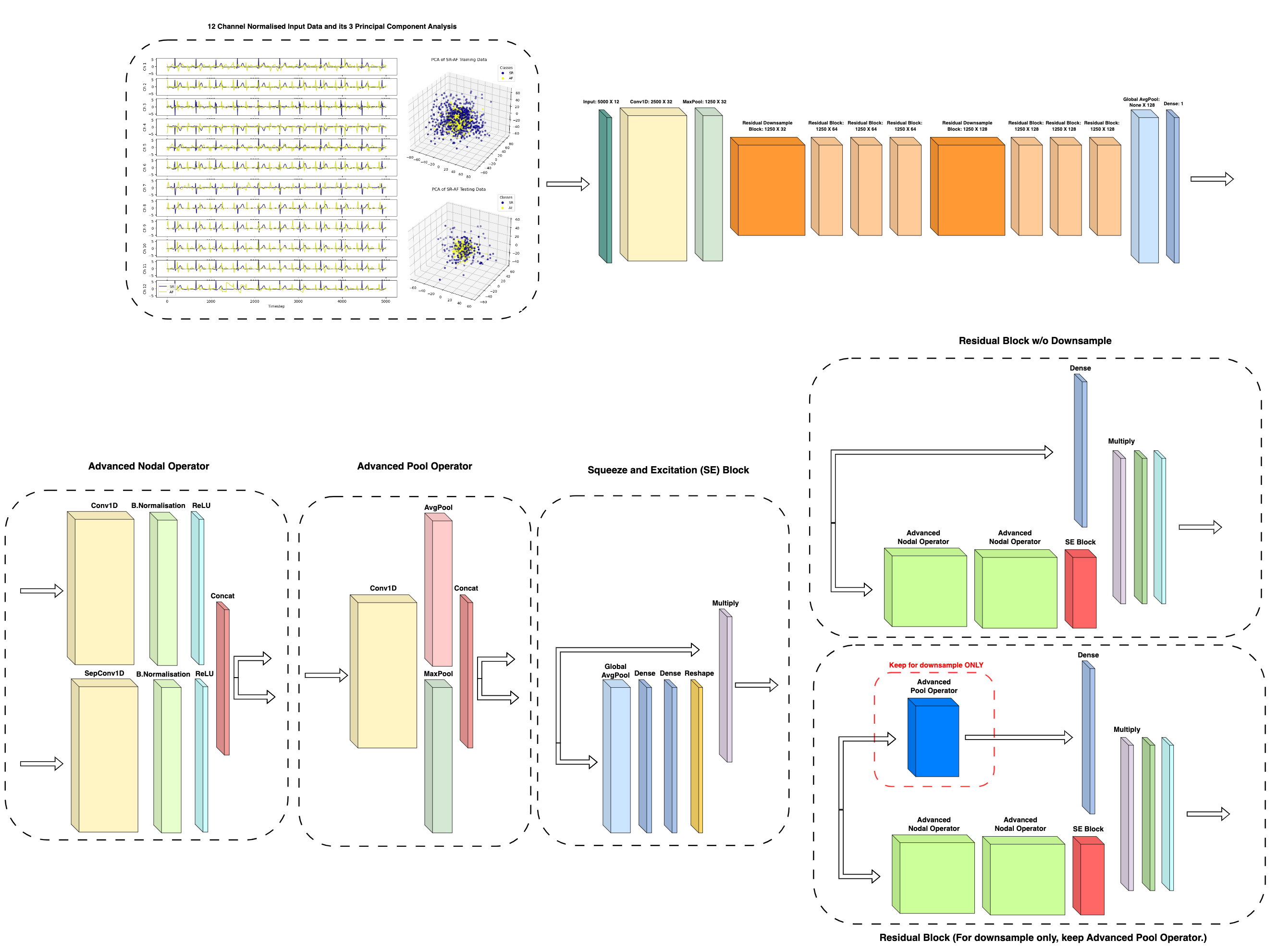
SERN-AwGOP figure
SERN-AwGOP: Squeeze-and-Excitation Residual Network With an Attention-Weighted Generalized Operational Perceptron for Atrial Fibrillation Detection
Soumil Hooda*, Rajesh Kumar Tripathy
IEEE Access, 2025

SERN-AwGOP detects atrial fibrillation from ECG with high accuracy, robustness to noise, and strong cross-dataset generalization.

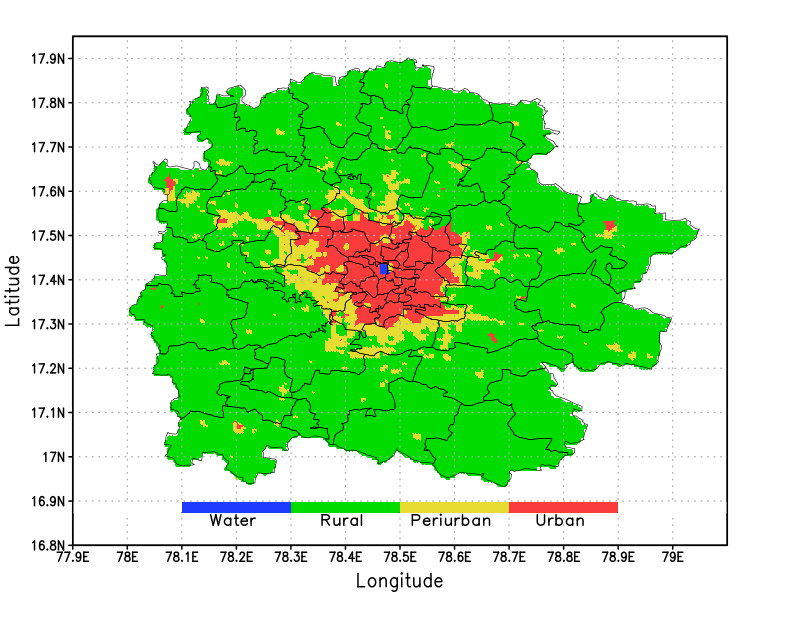
Peri-urban demarcation figure
Supervised Model for Peri-Urban Area Demarcation in Hyderabad, India
Ravi Bhushan, Soumil Hooda*, Hiten Vidhani, Manik Gupta, Lavyana Suresh, Timothy Clune
IEEE Geoscience and Remote Sensing Letters, 2024

RBF-SVM model maps peri-urban expansion near Hyderabad, revealing 108% growth.

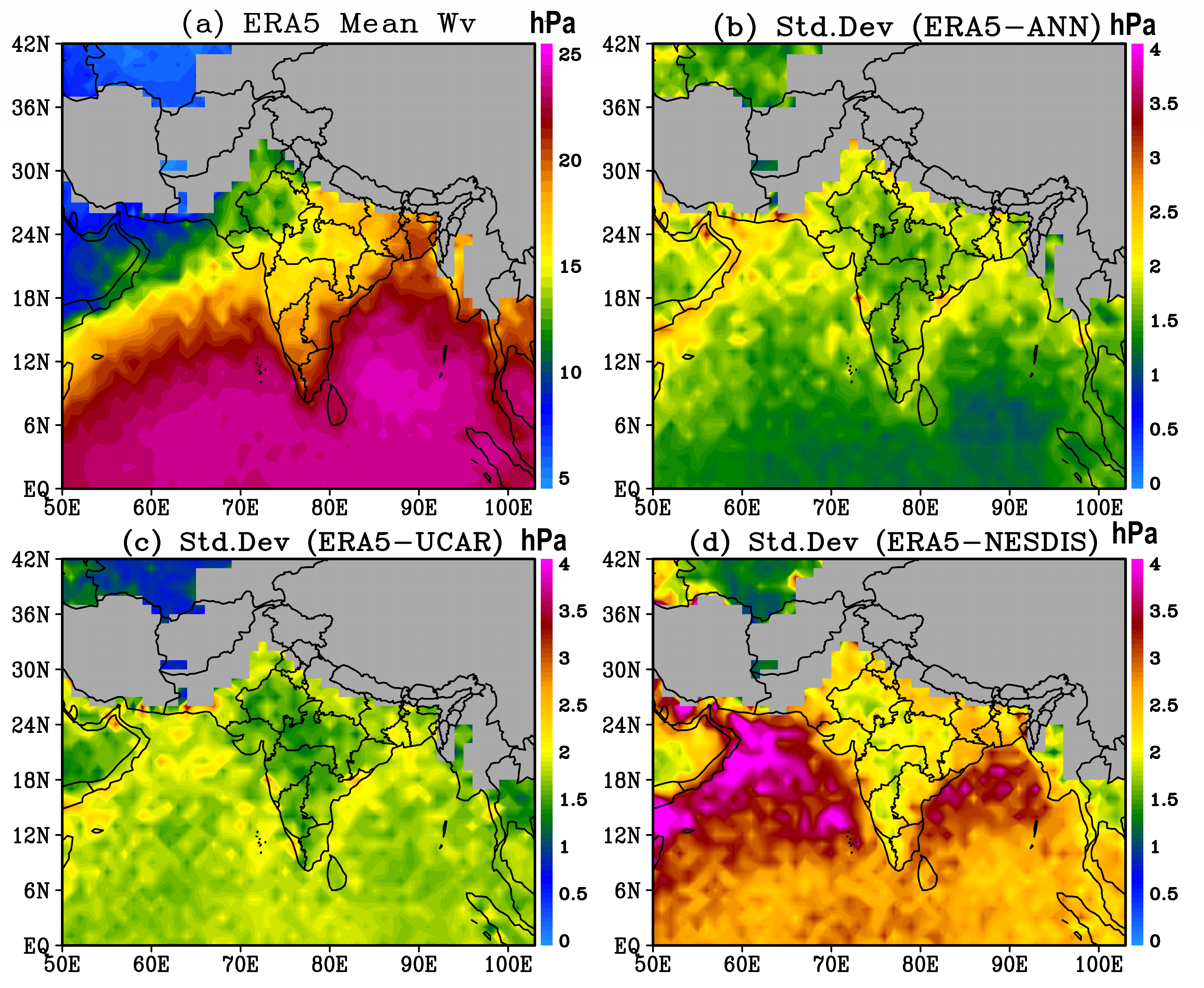
Water vapor retrieval figure
Retrieval of Atmospheric Water Vapor Profiles From COSMIC-2 Radio Occultation Constellation Using Machine Learning
Soumil Hooda*, Manik Gupta, Randhir Singh, Satya P. Ojha
IEEE Transactions on Geoscience and Remote Sensing, 2023

ANN model retrieves atmospheric water vapor from COSMIC-2 data, outperforming existing methods.


Last updated on .